Deep Cuts: Analysis And Notes On The Upcoming Adaptation
Thank you Holly Brickley.

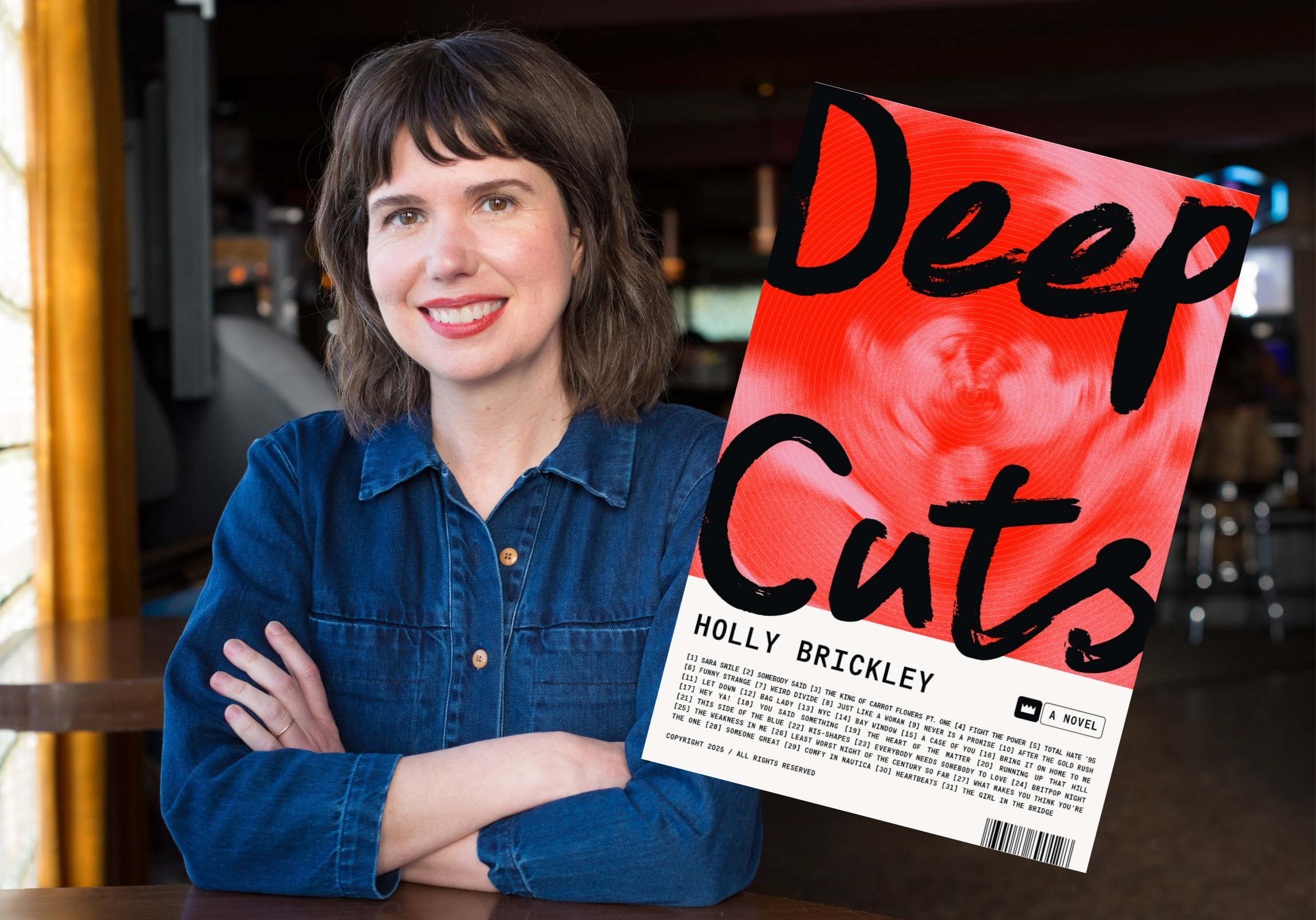
Just the other day, I lamented to some of my friends my discomfort in not being able to relate to most female characters in media, always ending up identifying instead with those really bitter, hilarious but toxic male characters (think Denzel Washington with a side of Nic Cage type of thing… and yes, I too am a Capricorn).
As the oldest and only daughter in my family, I’ve always had a very complicated relationship with my femininity, responsibilities, and expectations. No surprise there.
And this summer carried a lot of introspection, realizations, and rediscovered fears.
So when in September, I picked up my first novel in months (I’m usually very diffident about novels, preferring essays, and critical works void of unpleasant emotionality), I wasn’t expecting to be confronted with a story that hit way too close to home.
With a main character who is so unpleasantly awkward and inadvertently abrasive, who retains so many fears and desires of mine, it actually scared me at times.
There were days when I couldn’t get through two pages without feeling nauseous and charged with a kind of hunger that is hard to place, or detail. Congrats to the author.
I was not aware of the film adaptation back in September.
I had simply found the eBook discounted, and the plot ‘simple enough’ to trick me into buying it on a lazy Friday afternoon. My ignorance of the adaptation matters here because it allowed me to drown myself in these characters without fantasies of production hells or faces I did not appreciate.
That was the best place to be when starting this book and also the most painful.
I was confronted with this girl who sounded so much like me, at times looked like me, and who, in being passionate, always ends up looking like a bitch.
Because that’s what happens when you don’t like yourself, but are self-aware enough to recognize the one gift you have: observance.
Deep Cuts starts like your typical coming-of-age story set in college in the early 2000s.
A random encounter in a pub brings our three main characters together into a braid of recognition and self-reflection that bleeds into conflict and so much love for each other.
But this is not a story about love exactly; it’s more about how you learn to confront it, to talk about it, to manage it as you age.
The love for the people around you, the love for your craft, the love for your job, and the love for yourself (or lack thereof).
And maybe more importantly, this is a book about music and its ramifications: how its branches infect every part of our life.
I would say this is a story about creative asymmetry.
There are two different strings in this book that run parallel and almost never touch: the ‘fractured and unsynchronized love’ string, and the ‘continuous but synchronized’ fear string. I will focus more on the latter because, as a pessimist, I don’t believe the ending of this book is hopeful; just honest about its characters’ dishonesty.
In the second string, the “fear” one, we see two people who collide into each other in the perfect place, at the perfect time.
In college, they explore their passions, their talents, and themselves, mostly.
They become magnets for each other out of a deep admiration and appreciation for the other’s abilities.
And what saves or dooms their relationship, depending on the point of view, is that the physical is hardly consumed (debatable, but please try to follow me here). They don’t merge like that… only creatively.
Through the failed romance, you realize that what really hurts in this story is the unequal talent.
It’s the jealousy for each other’s abilities that cannot be extinguished, because the only solution would be to become a single being, and we’re not in science fiction land here.
Jealousy corrodes this story, but what makes it never ugly is the pure honesty with which it is expressed.
And I wish jealousy could be so beautiful in the real world.
This devastating discrepancy in the characters’ talents, mainly Percy’s, comes from how knowledgeable, passionate, and right she is about every single observation she makes… and yet how she holds no ability to express herself into art that is completely hers.
It’s a devastation that comes from seeing how confident she becomes while talking about music, and the dread you witness her experience when confronted with Joe, who basically becomes her right hand, the actualizing tool of her mute soul.
I would go as far as to argue that she doesn’t love him at all, but that he becomes a separate extension of her mind. But what the hell! What is love if not attraction plus admiration and understanding?
I would like to take a breather, or seemingly so, from the emotional core of the story and shift toward the fun one: music.
Music in Deep Cuts is, admittedly, a lot.
It’s everywhere, sometimes to the point of distraction, and I understand why for some readers it might feel invasive or excessive.
But that excess is structural. Music doesn’t simply accompany Percy’s life; it surrounds it, colonizes it, presses itself onto every relationship, every conversation, every emotional turn. The novel mirrors Percy’s own way of moving through the world: dominant, associative, overwhelming, incapable of keeping passion at a polite distance.
Reading the book often felt chaotic in a very specific, subdued way; not explosive, but constant.
The music functions as an entry point into that state. It recreates the subtle disorder of Percy’s interior life, where feelings are not neatly processed but continuously refracted through sound, memory, and reference.
For a reader who experiences music viscerally, this accumulation doesn’t just illustrate her psychology.
Of course, this perception is not universal. The music invoked belongs to a specific time, a specific sensibility, and a specific emotional literacy.
If you are not wired to receive music this way, the novel may feel insistent, lazy.
But that risk feels deliberate.
Percy does not curate herself gently, and the book refuses to do so either.
The reader is subjected to the same imposition that Percy enacts on the people around her. What might be read as indulgence or overload, becomes a formal alignment between character and structure: the novel behaves like its protagonist.
And if it punches you in the gut, it’s because it was never meant to tap you politely on the shoulder.
Talking about the adaptation of Deep Cuts means entering a more speculative territory, one that inevitably exposes the fragility of the novel’s internal balance.
This is a story whose power lies in texture rather than climax, in accumulation rather than release. Any attempt to translate it to the screen risks mistaking emotional density for emotional excess.
The choice of Sean Durkin as director is, in this sense, both intriguing and unsettling. Durkin is a filmmaker deeply invested in emotional proximity. His recent work, particularly The Iron Claw, proves his ability to construct emotionally devastating narratives, but it also reveals a tendency toward emotional direction: films that ask, quite clearly, to be felt in a specific way. The Iron Claw wants you to cry; it builds toward that release and is elevated by performances that lean fully into expressive suffering.
This is precisely what makes me uneasy.
Deep Cuts is an emotional novel, but it is not manipulative. There are no gratuitous breakdowns, no scenes designed to collapse under the weight of feeling.
Its devastation comes from restraint, from imbalance, from things that remain unresolved.
My fear is not that Durkin lacks sensitivity, but that his sensitivity could become too instructive, that the film might tell the audience how to feel instead of letting discomfort accumulate quietly. Still, Durkin is relatively young, and this project could push him toward something colder, more observational, less cathartic.
If the choice of director provokes caution, the involvement of A24 as the production company feels, conversely, like a form of protection. A24’s track record suggests a resistance to turning complex material into safe, romanticized narratives, (yes, I know The Iron Claw is an A24 movie, my position still stands).
Even when their films flirt with naivety, they rarely serve themselves.
Their interest in unlikable protagonists, female interiority, and morally ambiguous emotional landscapes makes Deep Cuts feel conceptually aligned with their catalogue.
The studio’s relationship with music-heavy films is also significant. From the Safdie brothers’ work, (ex. Good Time, Uncut Gems), to other projects where sound operates as pressure rather than ornament, (think Under The Silver Lake), A24 has shown a precise, sometimes abrasive approach to music.
This matters for a story where music is not background but cognitive environment. Whether one likes that intensity or not, it is rarely careless. Good!
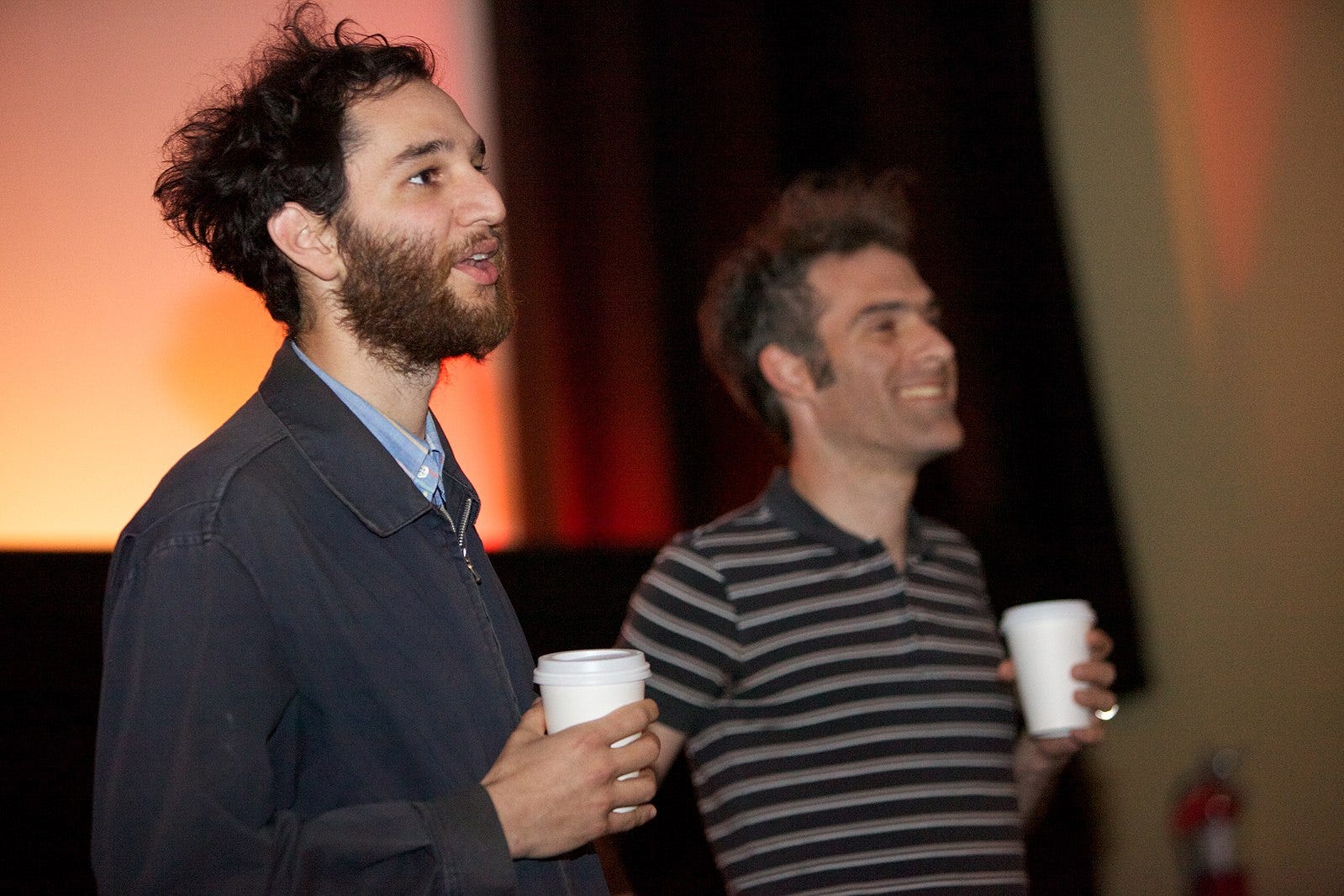
At the same time, the involvement of producers like Josh Safdie and Ronald Bronstein introduces another productive anxiety.
The Safdie aesthetic is famously chaotic, externally stressful, almost aggressive qualities that don’t immediately align with the introspective, inward tension of Deep Cuts.
This is not Uncut Gems; it is not a film driven by momentum or panic.
Still, Safdie is producing here, not directing, and he is working independently of his brother. That distinction matters.
Producing implies a different kind of authorship, one that may lean more toward facilitation than domination.
I remain curious and cautiously optimistic, this balance could tip in either direction.
Casting, however, is where my position as a viewer shifts more decisively.
Early choices suggesting Saoirse Ronan and Austin Butler as the leads were, frankly, disorienting. Neither actor aligns naturally with the characters as written.
Both carry a level of iconicity and maturity that works against the novel’s particular kind of naivety.
Ronan, even at her most youthful, has always projected an emotional and physical self-possession that Percy lacks externally. Butler, meanwhile, has become inseparable from a certain kind of stardom, one that flattens Joe’s awkwardness and shared immaturity.
In both cases, the casting would have imposed an interpretive layer that felt foreign to the book.
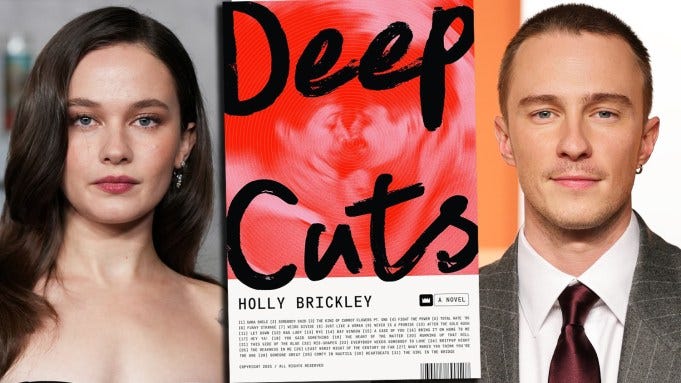
The eventual choices feel far more attuned to the material. I had imagined Percy, somewhat abstractly, as a brunette Patricia Arquette: soft features paired with an imposing, slightly abrasive presence, and Cailee Spaeny captures something remarkably close to that internal image. She carries innocence without fragility, unfiltered intensity.
There is something quietly dominant in her presence that feels essential to Percy.
Drew Starkey, as Joe, is an equally compelling choice. He is still positioning himself as a kind of blank surface, capable of absorbing and reflecting the energy of those around him. His performance in Queer (2024) demonstrated an ability to inhabit observation rather than assertion; an aloofness that feels deeply compatible with Joe’s role as both collaborator and mirror.
Joe’s naivety is different from Percy’s, less confrontational, more porous, and Starkey seems capable of holding that ambiguity without overstatement.
As a viewer, I am rooting for this adaptation, but I am also bracing myself. My greatest fear remains the treatment of music and of the central relationship. If the film leans too heavily into romance, or frames the relationship as more hopeful or redemptive than it is, it risks distorting the novel’s core.
This is not a tragic love story, but it is a hard one. Defined by imbalance, admiration, resentment, and creative asymmetry. To soften that tension would be to misunderstand the book entirely.
What I hope for, ultimately, is translation. Deep Cuts does not need new points of view imposed upon it; doing so would alter its themes, its objectives, its emotional honesty.
If the adaptation succeeds, it will be because it resists the temptation to explain, to console, or to resolve; trusting instead the same quiet, corrosive tensions that made the novel so ‘difficult’, and compelling to read.